 en
en






2026-06-05
Thermal Treatment for Joint Pain: Benefits and Efficacy
Osteoarticular pain can affect any joint (knees, shoulders, hips, wrists, elbows, ankles, hands, feet…).
This pain can be associated with various pathologies such as osteoarthritis, arthritis, tendinitis, and bursitis, among others.
Joint injuries can limit the movement of the affected limbs, and the resulting pain can be extremely uncomfortable and bothersome, consequently affecting patients' quality of life.
There are several therapeutic options capable of improving symptoms and reducing joint pain, ranging from lifestyle changes to medication and potentially surgical treatments, in order to facilitate mobility in the affected areas. Among these therapeutic options, thermal treatment—specifically at Termas de Chaves—is an excellent choice, either on its own or as a complement to the treatment of joint pathologies.
What does thermal treatment consist of?
Thermalism or thermal treatment consists of using mineral-medicinal thermal water with beneficial therapeutic characteristics, which have proven advantages in treating numerous joint pathologies.
The characteristics and composition of the thermal water will influence the capacity for recovery and symptom improvement. Hot and hypersaline thermal waters, such as those at Termas de Chaves, are the most suitable for osteoarticular pathologies.
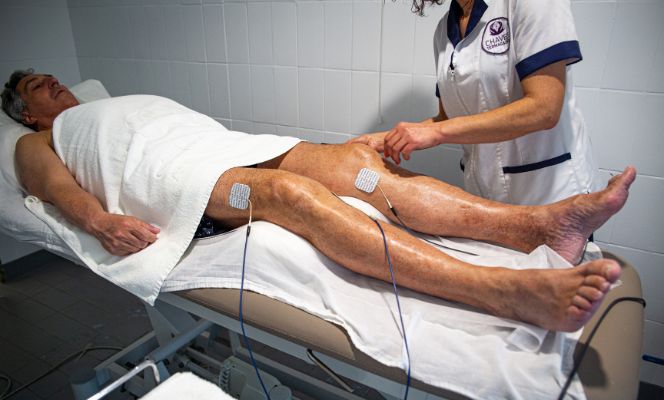
The way the thermal treatment is performed also influences its effectiveness in treating different pathologies. If the use of hydrotherapy is combined with Physical Medicine and Rehabilitation techniques (physiotherapy), among others, the results obtained can be more effective and long-lasting.
How does thermal treatment work for joint pain?
Thermal treatment for joint pain uses thermal water at a higher temperature than usual, which can vary between 34ºC and 38ºC depending on the techniques used, helping to relax muscles and reduce inflammation.
When this medicinal water is applied to painful areas like the affected joints, it causes the blood vessels in these zones to dilate (vasodilation). Vasodilation allows for an increase in blood flow, delivering a larger volume of oxygen and nutrients to the muscles and joints.
Hydrotherapy (treatment through water) allows exercises to be performed safely, with less weight load on the joints due to the body's immersion in water, facilitating movement, increasing muscle strength, and reducing joint pain.
Benefits of thermal treatments
In cases of osteoarticular pain, thermal treatments offer benefits such as those mentioned above (muscle relaxation and reduction of joint stiffness, for example), allowing these problems to be treated more naturally, without heavy reliance on pharmaceuticals (medication). I
t is known that hyperthermal, bicarbonated, and hypermineralized thermal waters, like the one at Termas de Chaves, reduce inflammation and the deterioration of joint cartilage, consequently relieving pain in these areas.
Other benefits associated with thermal treatment for osteoarticular pain include:
-
Improvement of joint and ligament flexibility, increasing daily mobility;
-
Pain reduction through the release of endorphins;
-
Increased patient comfort in daily life;
-
Improved quality of life.
Scientific evidence on the efficacy of thermal treatment
Numerous scientific studies attest to the effectiveness of thermal treatment in chronic pathologies, particularly osteoarticular ones.
Thermal treatment is, indeed, an effective complementary choice that significantly relieves symptoms, thereby improving the patients' quality of life. Its regular use reduces the reliance on medication and other more invasive therapeutic approaches.
In most cases, thermal treatment results in greater efficacy when performed regularly and over a more prolonged period.
The success of thermal treatment varies from patient to patient and depends on the type and severity of the associated disease, as well as the characteristics of the thermal water used and the techniques applied.
Advantages compared to other treatments
Several advantages are known when comparing thermal treatment with other alternatives, namely the use of medication:
-
Reduction of side effects: Some medications cause side effects, whereas thermal treatment is better tolerated by most people;
-
Non-invasive techniques: Thermal treatments are not considered invasive, making them well-tolerated by the vast majority of patients;
-
Long-term benefits: Several studies show that regular thermalism provides a better quality of life in the long term, reducing the frequency and intensity of symptoms.
What should I know before starting the treatment?
It is very important to seek medical advice at a spa/thermal center to analyze the feasibility of combining thermalism with other therapeutic options to maximize treatment efficacy. In this regard, there should always be an evaluation by a hydrologist physician who, after a medical consultation and knowing your clinical history, will outline the best therapeutic plan.
Thermal treatment for joint pain should not be seen as a substitute for medical follow-up. Speak with your attending physician about the possibility of thermal treatment and maintain follow-up with regular consultations.
Be aware that thermal treatments are co-funded by the National Health Service (SNS) and various health subsystem insurance schemes (ADSE, ADMG, SAMS, etc.).
This article was originally published in Saúde e Bem-Estar - www.saudebemestar.pt and written in partnership with Termas de Chaves.